
Garage doors in Olathe, repaired, serviced and replaced, for the homes near the highway, the newer houses on the edges of town and the machine sheds on the farms that made the town known for its sweet corn. The estimate is free.
Tell us what the door is doing. The estimate is free and you can say no.
In a town where a lot of households farm or work for someone who does, the garage often does double duty: the car on one side, tools, a workbench and a freezer on the other. Doors on those garages get opened far more often than a typical suburban door, and the springs wear out on schedule. A door that's getting heavy to lift, or an opener that labors with it, is the usual first sign.
Newer homes around the outskirts have attached two-car doors, where the calls are more often about openers, remotes and safety eyes than about the door itself.
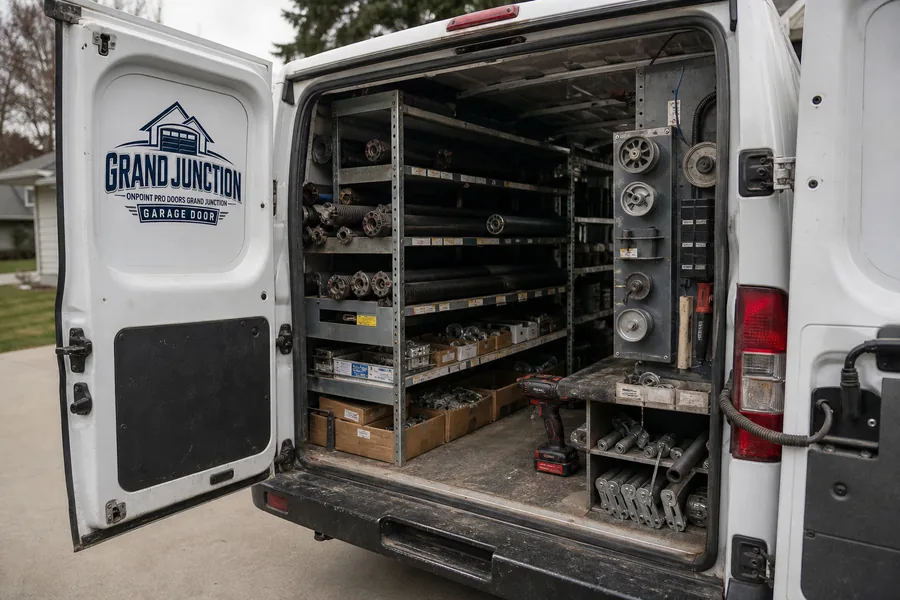
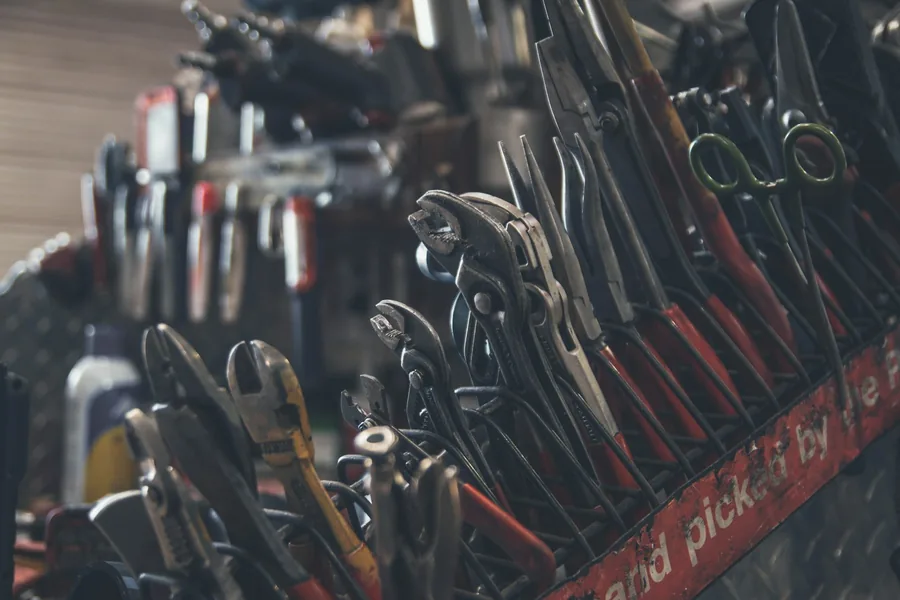
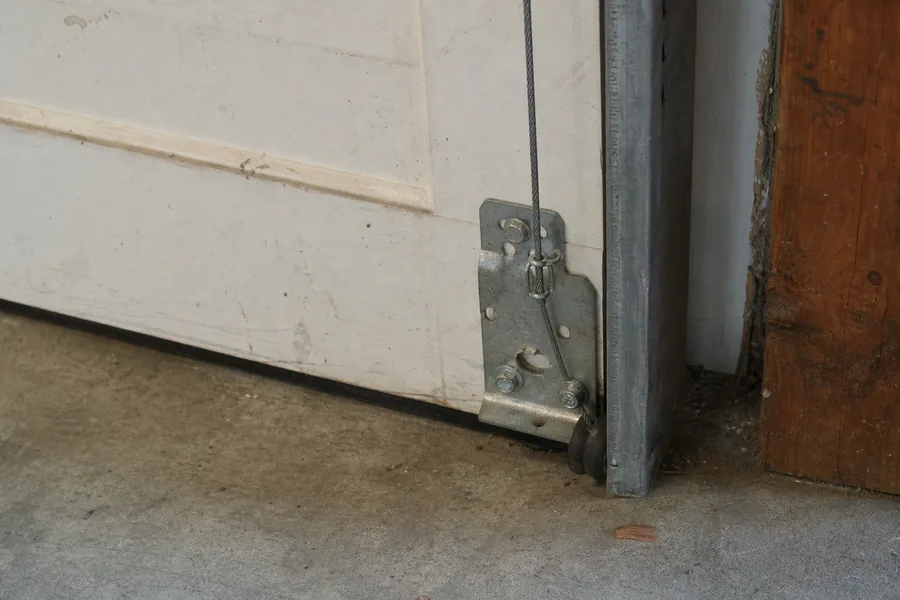
Out on the farms, the big doors are on the buildings where tractors, planters and trucks spend the winter. Those are wide, tall and heavy, and in a wind they need struts across the sections to stay straight. When a cable on one side of a door that size lets go, the door drops at that corner and can jam in the opening; the right move is to keep it shut and call instead of trying to raise it with equipment.
Some doors hardly move for months at a stretch, then get used every day at planting or harvest. Rollers that sat all winter can seize, springs that have rusted can let go the first week of heavy use, and a bottom seal left in the sun cracks. A service visit before the busy season, with the rollers, hinges and springs looked at and lubricated, heads off most of that.
Five steps, the same order each time.
For a house, the choice is mostly about insulation, windows and a style that suits the place: a plain raised panel on a ranch house, a carriage-house look on something older. For a shop, it's about the size of the biggest thing that has to go through and how often the door will run. The opening is measured before anything is recommended, and you see the reasons for each option.
Farm country is dusty, and dust finds its way into tracks, rollers and the opener's rail. A door that has turned loud or rough usually needs the tracks cleaned and the rollers replaced, not anything bigger. The two safety eyes by the floor gather dust as well, and a door that starts reversing for no clear reason often just needs the lenses cleaned and realigned.
Weatherstripping along the sides and a fresh bottom seal keep most of it out of the garage in the first place.
A garage on a farm is an easy way in for mice and birds, and the usual gaps are a bottom seal that has cracked, weatherstripping that has pulled away from the sides, and the space at the top of a shop door. Replacing the bottom seal and the side seals closes most of it off, and brush seals along the edges of a roll-up door handle the rest. It also keeps a lot of the field dust out.
House openers here are mostly the common brands, and parts for them are on the truck. A shop door needs a heavier unit, sometimes a wall-mounted one beside the door, and a keypad outside so nobody has to find a remote in the cab. On any new opener, battery backup means the door still works when a storm takes the power out.
Some older farm garages still close with swing-out wood doors or a door that slides along a rail. Those can usually be replaced with a sectional door that rolls up inside, provided there's enough headroom and the framing around the opening is sound. Both are checked on the first visit, before any new door is suggested.
On a working farm, several people may need into the shop, and remotes get lost in trucks and tractors. A keypad mounted outside the door lets anyone with the code open it, and the code can be changed when the season's help moves on. Most keypads also close the door with one press on the way out.
The town sits on the same stretch of Highway 50 the truck already runs, with Delta to the north and Montrose to the south, so farms on the county roads off the highway are an ordinary call. Give us the address and your arrival window will account for where you are on the map.
Yes. Big, heavy doors are handled the same way, with the stronger springs, cables and rollers they need brought along.
Leave it closed and don't lift it with equipment. A cable has likely let go; it gets braced and repaired safely.
Dusty or misaligned safety eyes are the usual cause, sometimes a heavy door. Both are checked on the visit.
It's the best time. Rollers, hinges and springs looked at and lubricated before the busy weeks keeps the door running when it matters most.
Yes, for houses and shops, measured on site with the options explained.
Usually, yes. Replacing the bottom seal and the side weatherstrip closes the gaps most of them use.
A call or the form, then a visit, and a written estimate you're free to turn down.
Call or fill out the form; the technician phones just before pulling into the drive.
You'll have the estimate on paper, free, and no work starts without your say-so.
A two-hour window instead of a whole day, and a call before the technician leaves. Free throughout Mesa County. The estimate is free either way.
Want to talk instead? Call (970) 238-2833.
Tell us what the door is doing. The estimate is free and you can say no.