People calling about a new opener usually ask about the drive before the brand. Here's how belt, chain, screw and wall-mounted units compare in the houses and shops around the valley, and why the door is checked before any of them go up.
Tell us what the door is doing. The estimate is free and you can say no.
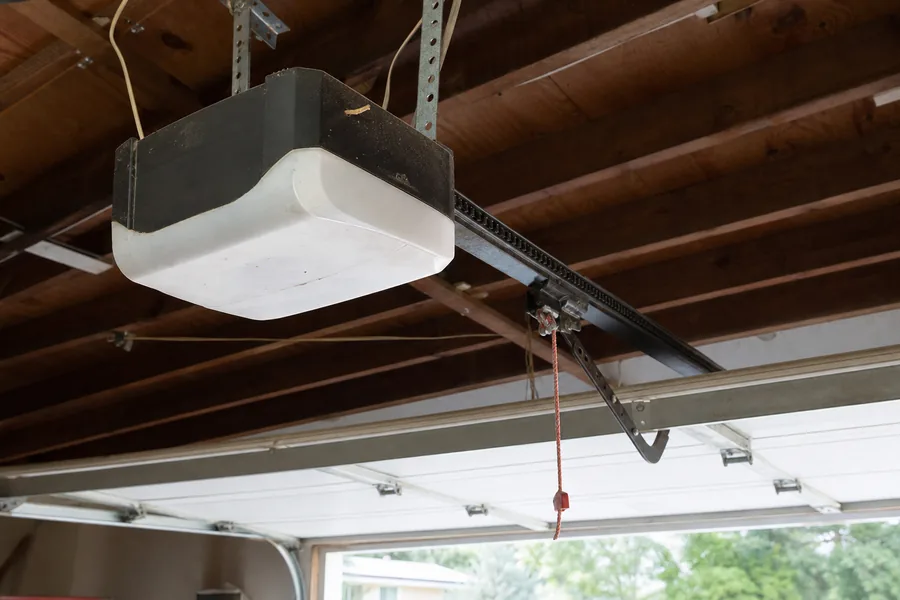
Ceiling-mounted openers all use a rail: the motor near the back wall pulls a trolley, and the trolley pulls the door by an arm bolted to the top section. What differs is how the pull is transmitted. A chain does it the way a bicycle does; a belt is a reinforced rubber strap; a screw drive turns a long threaded rod; a direct drive moves the trolley itself along a fixed chain.
Wall-mounted units skip the rail entirely. They sit beside the door and turn the torsion bar directly, which frees the ceiling for storage racks, a raft hung overhead or a car lift.
In the valley we install all of them. Ranch houses with no rooms over the garage do fine with a chain, shops with tall doors often get wall-mounted or commercial units, and attached garages with rooms above get belts.
For a shop or a detached garage where noise doesn't matter, a chain drive is still a sound choice. For a garage attached to living space, we generally recommend a belt.
Heat is worth a thought too. A garage facing the afternoon sun can get very hot by August, and opener electronics last longer when the unit isn't straining against a door that should be balanced.
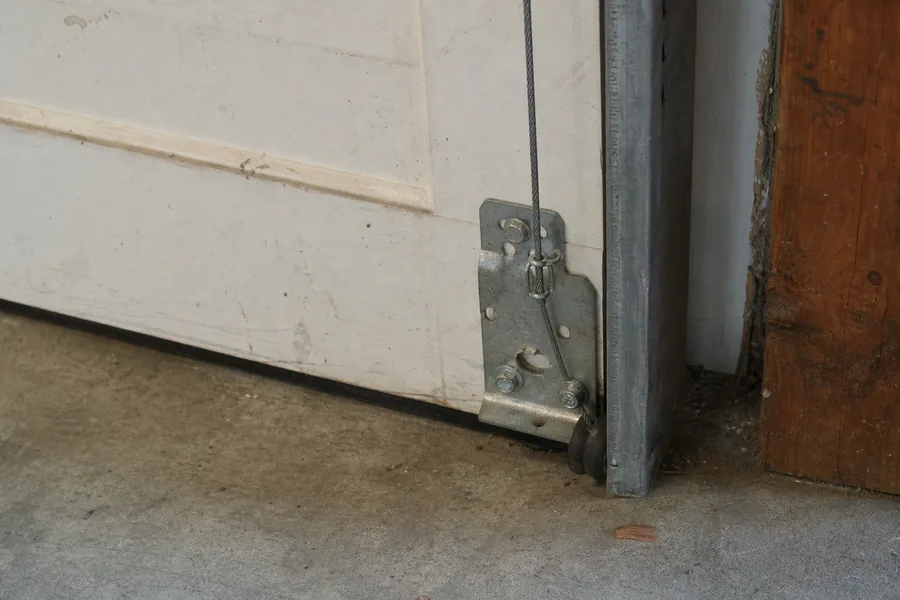
Every new opener goes in the same way.
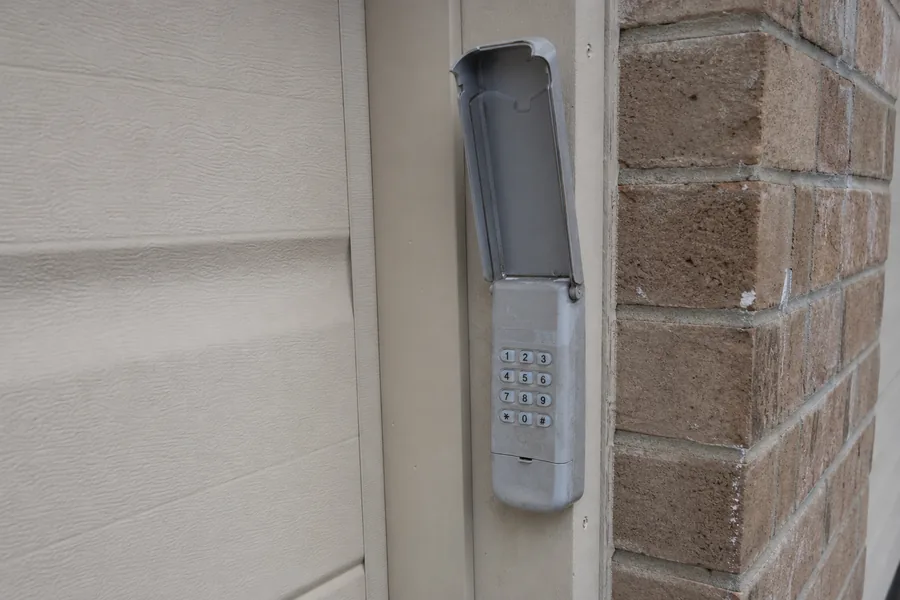
Current LiftMaster, Chamberlain and Genie openers connect to Wi-Fi, so you can see the door's status, close it from anywhere, get an alert when it moves, and set it to close on a timer.
Timer-to-close is especially useful in a busy garage with kids and bikes going in and out all day; the door shuts itself if it's forgotten.
If the garage has a car lift or racks overhead, a wall-mounted unit with Wi-Fi covers the same features without a rail.
Battery backup keeps the opener working through a power outage for a number of cycles, which matters when the car needs out during a storm. We recommend it on most installs.
Summer storms rolling off the Grand Mesa bring outages with them, often late in the afternoon when everyone is coming home.
The model names people bring up most are the Genie Signature Series belt drives and the LiftMaster belt drives with battery backup and Wi-Fi. They're good units. How long they last depends on the door they're installed on.
Horsepower figures matter less than the marketing suggests. A balanced single door needs little; a heavy double or a tall shop door needs more. A bigger motor on an unbalanced door only delays the failure.
Screw drives still turn up in older valley garages. They're durable but loud, and when one wears out it's usually replaced with a belt or chain unit.
A lot of new-opener calls across Mesa County end without a new opener. The existing unit is struggling because a spring has worn out, a roller has cracked in the heat, or a cable is fraying. Fix those and the opener often keeps going.
Dry grease is a local culprit. In this climate the lubricant on springs, rollers and hinges hardens into a crust, the door drags, and the opener takes the blame.
Cracked stamped rollers are the other valley favorite. Heat followed by cold splits them, the door starts to shake, and the opener works harder every trip.
The estimate is free. You hear what the door needs and which opener suits it before anything is decided, and no is always an acceptable answer.
"Belts can't handle heavy doors." Current belts are steel-reinforced and rated for heavy doubles. The springs set the real limit.
"A bigger motor fixes a slow door." A slow, straining door is unbalanced. More horsepower doesn't change that.
"Every smart opener needs a paid plan." The basic apps from the major brands don't; paid tiers only add extras like video storage.
"The old rail can be reused." Almost never across brands. The new opener comes with its own rail, and the whole assembly is replaced.
Noticeably, especially in rooms over or next to the garage. A chain rattles; a belt hums. In a detached shop, the difference hardly matters.
Nearly always, once the door is balanced. The springs and hardware are checked first, and crusted rollers and hinges get a lubricant that won't gum up in the dust.
Most of an afternoon, including pairing every remote and car and testing the safety reverse. If springs or rollers need replacing first, that's usually done the same visit.
A wall-mounted unit sits beside the door and turns the torsion bar, leaving the ceiling free for racks, a hanging raft or a lift. It needs torsion springs, which most attached garages here have.
Yes, anywhere in Mesa County. You hear what the door needs and which opener fits before anything is decided. Shop doors can go on the same estimate.
Often. An opener that has quit with the car inside is treated as urgent. Say so when you call, and mention any tall shop doors.
Pear Park to Loma, one call puts you on the route with a two-hour arrival range, and the technician calls when leaving the previous stop.
Free estimate. Throughout Mesa County, including Redlands, Orchard Mesa, North Avenue, Fruita, Clifton, Palisade, Loma, Whitewater, Mack.
Tell us what the current opener is doing and you'll get an arrival range. The visit and the estimate are free anywhere in Mesa County.
Want to talk instead? Call (970) 238-2833.
Brand, age and what it's doing. The estimate is on the house.