When the door creeps down, changes its mind and rolls back up while a light blinks on the opener, the two little eyes near the floor have lost track of each other. In a valley this sunny and this dusty, glare, grit and bumped brackets are behind most of it. You get a free estimate before anything is touched.
Tell us what the door is doing. The estimate is free and you can say no.
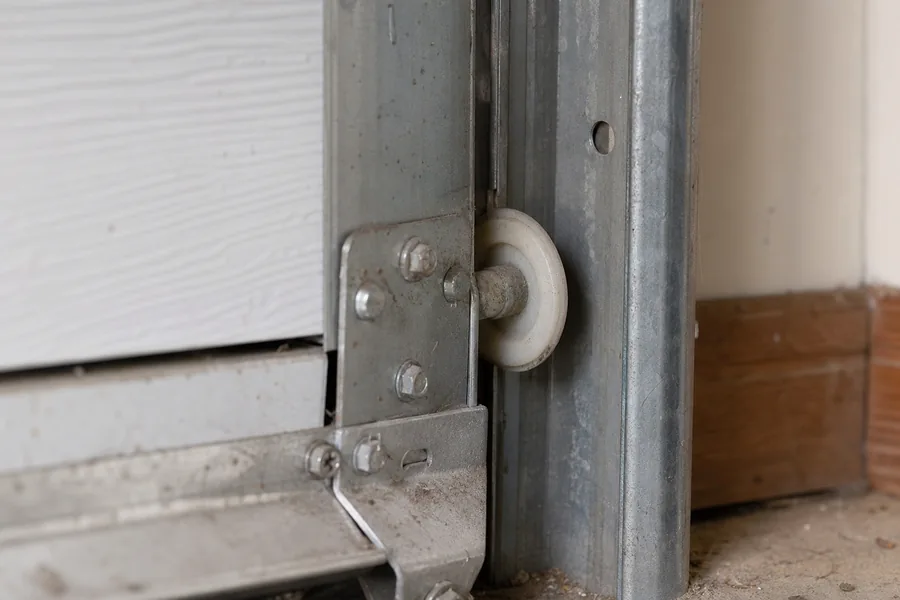
Down by the bottom of each track sits a small sensor. The one on one side shoots a beam of infrared light across the opening; the one on the other side is there to catch it. While the door travels down, the opener keeps asking whether that beam is still arriving. The moment the answer is no, it stops and sends the door back up.
That reflex is the reason a closing door doesn't flatten a bike, a toddler or a dog that wanders in at the wrong moment. So a door that won't finish closing is, most of the time, a healthy opener acting on bad information from the eyes. Work out why they can't see each other and the door behaves again.
Just tell us what you see when you call. The lamp colors, and whether they blink, are enough for the right sensors and wire to come along.
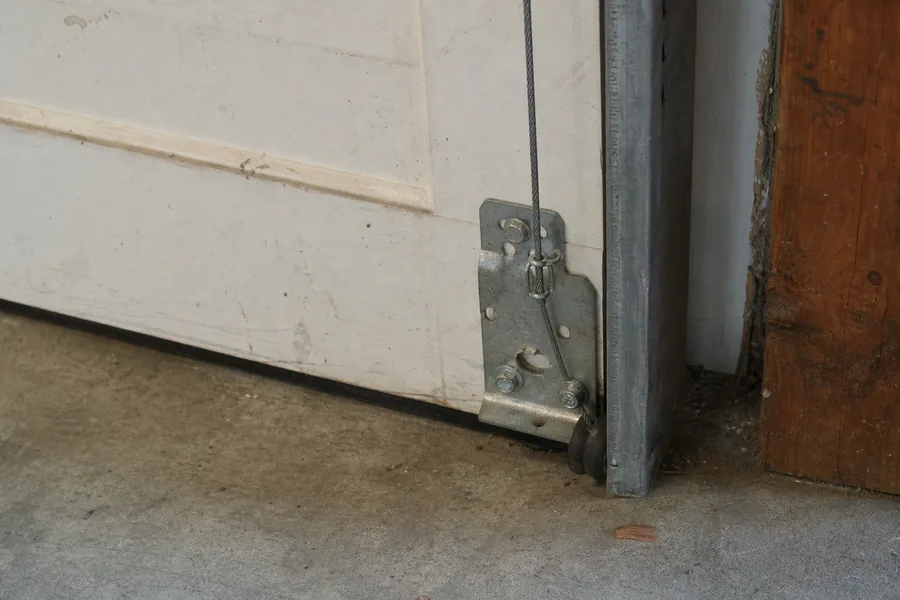
The usual causes in this valley, roughly in the order the technician rules them out.
An open garage after dark, with bikes and tools on view from the street, is not something to sit on until morning. Call and say the door is stuck open. It gets a slot ahead of routine work, and the technician brings a matched pair of eyes in case yours are finished.
Resist the trick of taping both sensors to a shelf so they face each other. The door will close, but it closes with nothing watching the opening, which is exactly the situation the eyes exist to prevent.
If both lamps glow and nothing sits in the path, the opener is backing up for another reason. Turning around just as it touches the floor points to a close limit set too far. Turning around partway, on a door that feels heavy in your hand, points to springs that have weakened and a force setting the opener can no longer stay under.
The valley's big swings between hot afternoons and cold nights play into this. Grease hardens into a crust on rollers and hinges, the door stiffens, and a door that was borderline in October trips the force limit in January. The technician looks at the door as well as the sensors for exactly that reason.
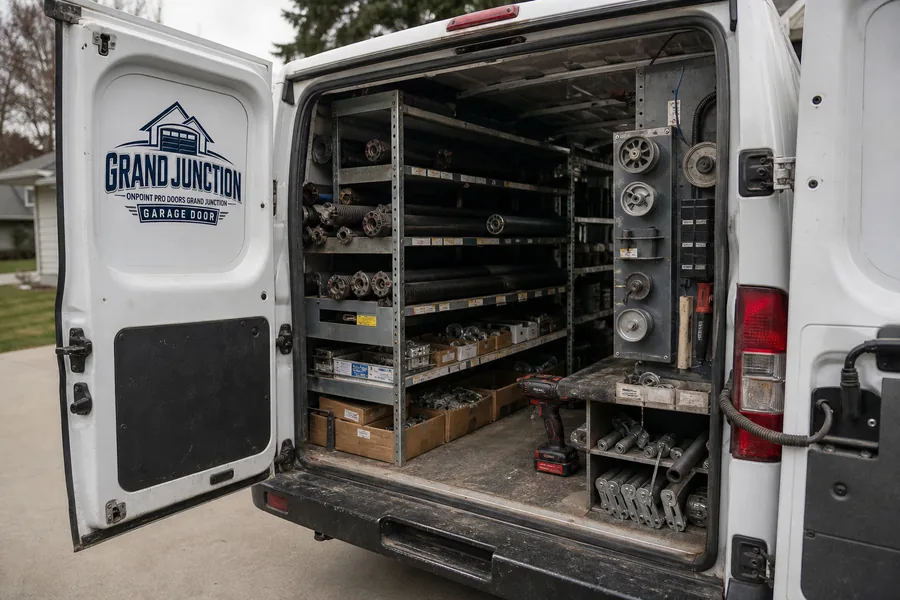
Sensors don't last forever out here. Heat bakes the housings, dust scours the lenses, and now and then one takes a direct hit from a bumper. LiftMaster, Chamberlain and Genie pairs ride on the truck, and because eyes are sold and wired as matched sets, a failed one is replaced along with its partner.
When the fault is the wire, the old run comes out and new wire goes up in insulated clips, well clear of anything that moves or gets leaned against.
The new eyes go on at matching heights, a few inches above the slab, aimed squarely at each other. A bracket that has been bent and straightened is replaced rather than trusted, because it will drift again.
The technician starts with what's in the path, then the lenses, then the aim, then the wire back to the opener, so nothing is replaced on a guess. If a sensor is dead, both are swapped. Last, the opener is disconnected and the door raised by hand; a door that fights you there has a spring or roller problem that will come back as a sensor complaint later.
Most of these calls wrap up quickly. When the door itself needs work, you hear what and why before anything more is done.
"The motor is going." Not usually. An opener that won't close because it thinks something is in the way is protecting you. Clear up what the eyes are seeing and it closes.
"Take the sensors off and be done with it." Every opener sold for homes here is required to have them for good reason. We put them right; we don't remove them.
"One bad sensor means a whole new system." A replacement pair wires into the opener you have. The rest of the system stays.
Often neither has failed. The lamp that's out usually belongs to the receiver, and it goes dark whenever the beam isn't reaching it. The path, the lenses and the aim are checked first, and the sensors are only replaced if they test bad.
That's still the sensors. Most openers let a held wall control override blocked eyes, so a door that only closes that way has a beam problem. A remote that never does anything is a separate issue, checked on the same visit.
In most cases it's the eyes, the wire or a bracket. An opener gets replaced only when the unit itself has quit, and you'll hear that on site, with the reason, before any decision.
That's low sun reaching the receiving eye. Swapping the two sensors so the receiver faces away from the sun, or shading it, ends the problem.
No, anywhere in Mesa County. If new sensors are needed, you're told before any work starts.
Often the same day. A garage that won't close is put ahead of routine work.
From the Redlands to Clifton, one phone call gets you onto that day's route with a two-hour arrival range, and the technician calls when leaving the previous job. Nobody tries to size up the door by phone.
Free estimate. Throughout Mesa County, including Redlands, Orchard Mesa, North Avenue, Fruita, Clifton, Palisade, Loma, Whitewater, Mack.
Describe the lamps and the door and you'll have an arrival range, not a guess. The visit and the estimate are free anywhere in Mesa County.
Want to talk instead? Call (970) 238-2833.
Which lamps are lit, and what the door does. The estimate is on the house.