Openers here deal with long driveways, late-summer storms rolling off the mesas, and houses that sometimes sit empty for weeks. Most problems come down to a receiver, a board, a sensor or a setting, and the parts are on the truck. The estimate is free.
Tell us what the door is doing. The estimate is free and you can say no.
On the bigger lots the garage can sit a long way back from the road, and remotes that ought to work from the car at the gate simply don't. Range comes down to three things: the remote's battery, the opener's antenna, and interference. The usual culprit is an LED bulb in the opener's own light socket, which can drown out the receiver. A bulb rated for garage openers, a repositioned antenna, or an external antenna kit mounted higher brings the range back. To run the door and get alerts from your phone, see our smart garage door openers page.
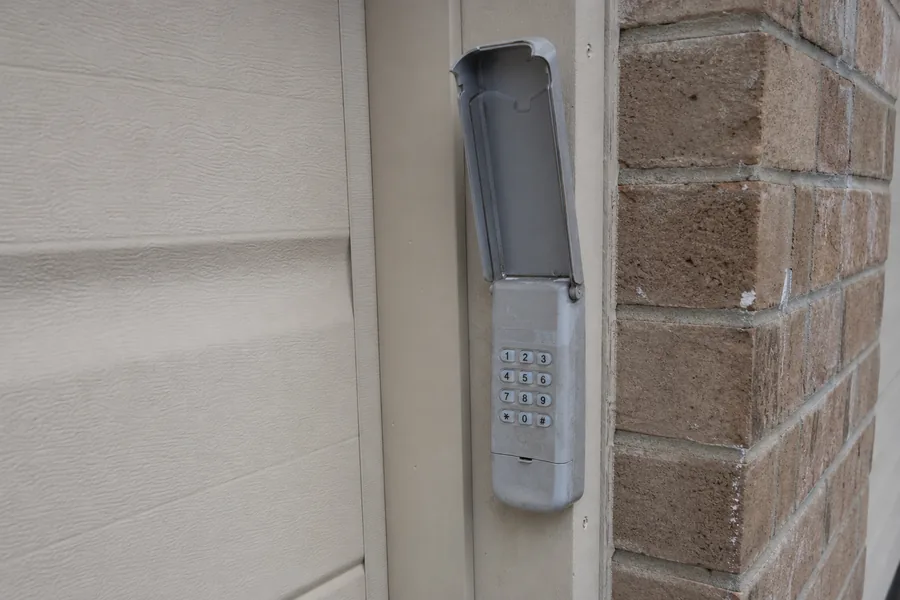
A keypad by the door covers the rest. Anyone with the code gets in without a remote, and changing a code takes seconds, which beats collecting remotes from everyone who ever borrowed one.
Late-summer thunderstorms mean lightning and brief outages, and it's the board that absorbs the surge. What you see is a dead opener, or one that obeys the wall button and ignores the remotes. A new board for the common brands is a same-visit job.
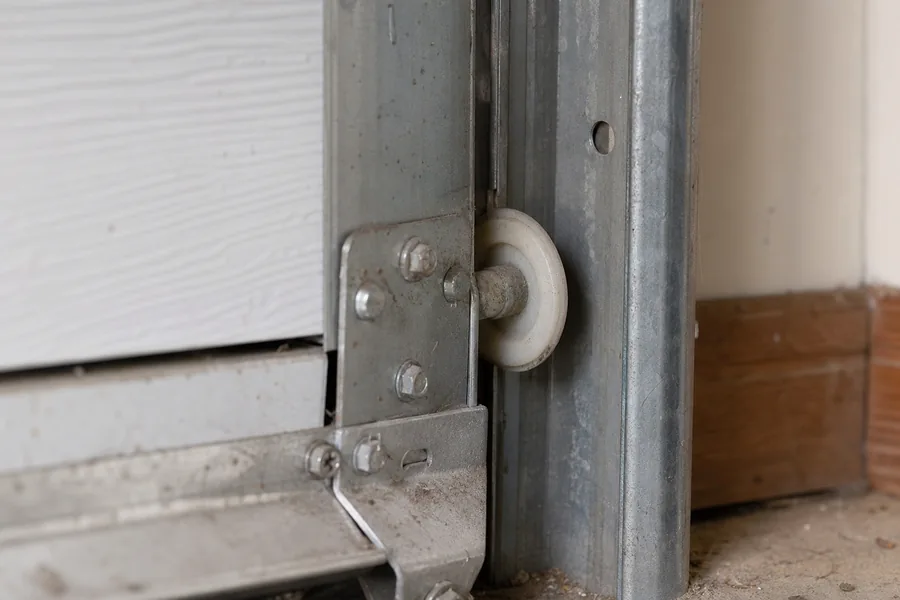
The dust that blows through before those storms leaves a film on the two sensors near the floor, and the door starts reversing on its way down. Cleaning and realigning the sensors, and replacing any with clouded lenses, stops it.
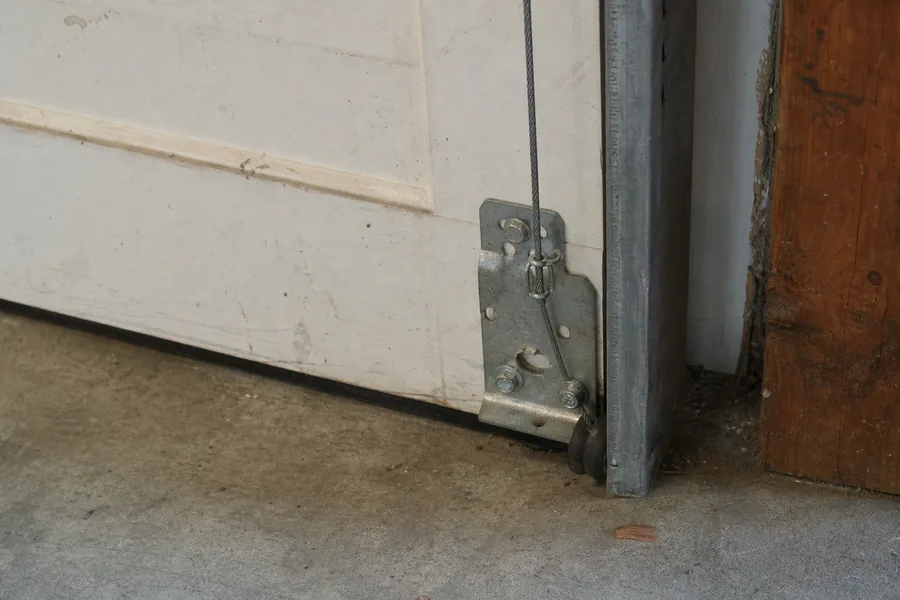
If the house is empty for stretches, whether for travel, a seasonal job or a second home, a Wi-Fi opener earns its keep. The phone gets an alert whenever the door moves, the door can be closed from anywhere, and there's a record of every opening. Older openers can take a small add-on module that does the same thing.
Battery backup matters more in a house nobody is watching. If the power goes out while you're away, the door still works for whoever is checking on the place, and it doesn't sit stuck until the power returns.
Always in this order, since the real cause often hides somewhere else.
Most openers are worth fixing. A new one starts to make sense when an older unit loses its board and its remotes still use fixed codes, or when the opener has been underpowered for the door since the day it went in. Then a current belt-drive or wall-mounted unit, with encrypted remotes and battery backup, makes more sense, and both paths are laid out before you decide.
If a new opener goes in, the old one leaves with us, and the new unit is set to your door's travel and weight before every remote, keypad and car button is programmed.
A house that has changed hands comes with the previous owner's remotes, their keypad code and whatever cars they paired. Clearing the opener's memory and teaching back only your own devices is quick, and it's the part people forget until a remote turns up missing.
The technician does it on any opener visit, along with a fresh keypad code and the car buttons, so the only way into the garage is the one you control.
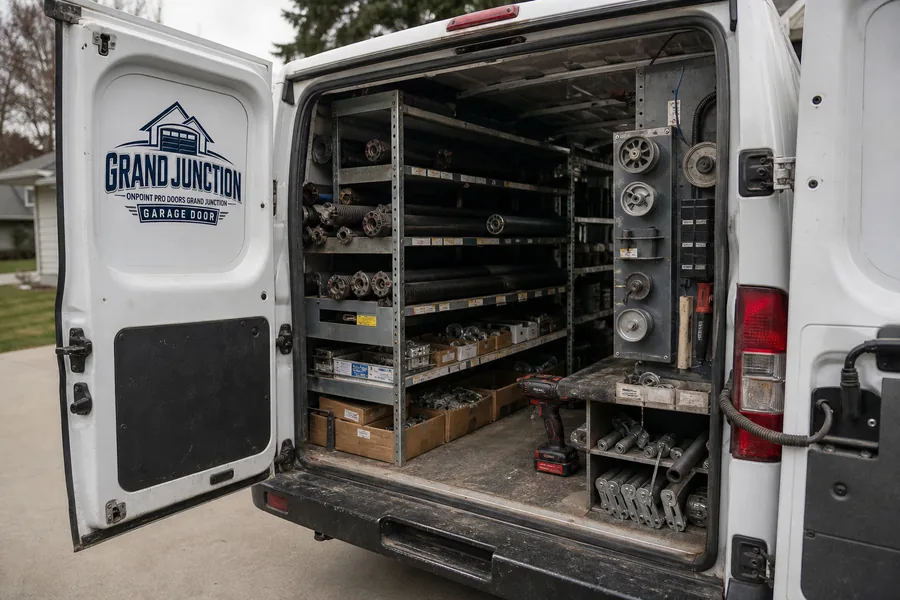
The Redlands, Orchard Mesa, Pear Park, Fruitvale, North Avenue and Horizon Drive, plus Fruita, Clifton, Palisade, Loma, Whitewater and Mack. The truck stocks boards, sensors, remotes and keypads for the big brands.
Tell us the road and you get a real time window.
An LED bulb can cut remote range. Garage-rated bulbs fix it.
Dust reverses doors. Filmed-over sensors stop the door from closing.
Storms kill boards. Surge protection on the outlet saves the next board.
An empty house needs alerts. A Wi-Fi opener tells you when the door moves.
Check the battery first; if that isn't it, the antenna position and an LED bulb in the opener's socket are the usual causes. Both are fixed on the visit.
The board likely took a surge. Boards for the common brands are carried on the truck and it's usually a same-visit repair.
The sensors near the floor can't see each other, usually because of dust, a bumped bracket or a damaged wire.
Yes. Newer Wi-Fi openers do it out of the box; older ones need a small add-on, and then you get alerts and can close the door from anywhere.
Yes, the whole valley, with the common parts on the truck.
Yes. Most cars built in the last couple of decades have buttons that learn from the opener; every car in the household is paired on the visit and tried from the driveway.
Free, and on paper first. No work starts without your OK.
One call, a two-hour window, and a call ahead from the technician. That's the routine across Grand Junction, Orchard Mesa and Fruita.
Free estimate. Throughout Mesa County, including Redlands, Orchard Mesa, North Avenue, Fruita, Clifton, Palisade, Loma, Whitewater, Mack.
A two-hour window instead of a whole day, and a call before the technician leaves. Free throughout Mesa County. The estimate is free either way.
Want to talk instead? Call (970) 238-2833.
Tell us what the door is doing. The estimate is free and you can say no.