Most cable trouble starts with one side of the door carrying more than its share. The door rises a little lopsided, then more so, and one morning a cable is off its drum or fraying at the corner. Rollers go the same slow way. Once a cable looks loose, leave the door shut and call. The estimate is free.
Tell us what the door is doing. The estimate is free and you can say no.
A door hangs from two cables, and the pair only stays healthy if the load is shared evenly. A spring that has lost some of its tension, a hinge that has cracked, or a section that has warped slightly all shift weight toward one corner. That cable stretches a little, sits looser in its drum, and starts to slip a groove now and then. You see it as a door that closes with daylight under one side, or that shudders as it starts to rise. A section dented by a trailer or cracked along a hinge line can often be swapped on its own; see garage door panel replacement.
Fixing the cable without finding what put the extra load on it only buys time. So the spring balance, the hinges and the sections are checked on the same visit, and whatever tipped the load is written up with the cable work.
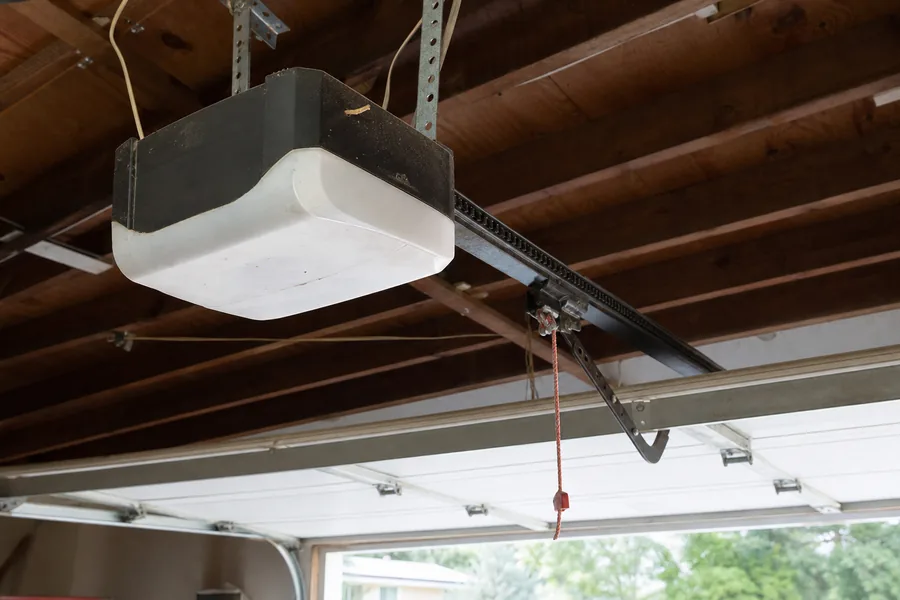
The attached two-car garages on the valley's ranch homes often still run the cables, drums and rollers they were built with. Hardware that old isn't necessarily failing, but it's rarely matched anymore: a spring replaced at some point with a different size, one cable swapped and the other not. That mismatch is behind a lot of doors that won't close square.
The answer is to bring the whole lifting side of the door back into one matched set: both cables, sound drums, and springs that suit the door's weight today.
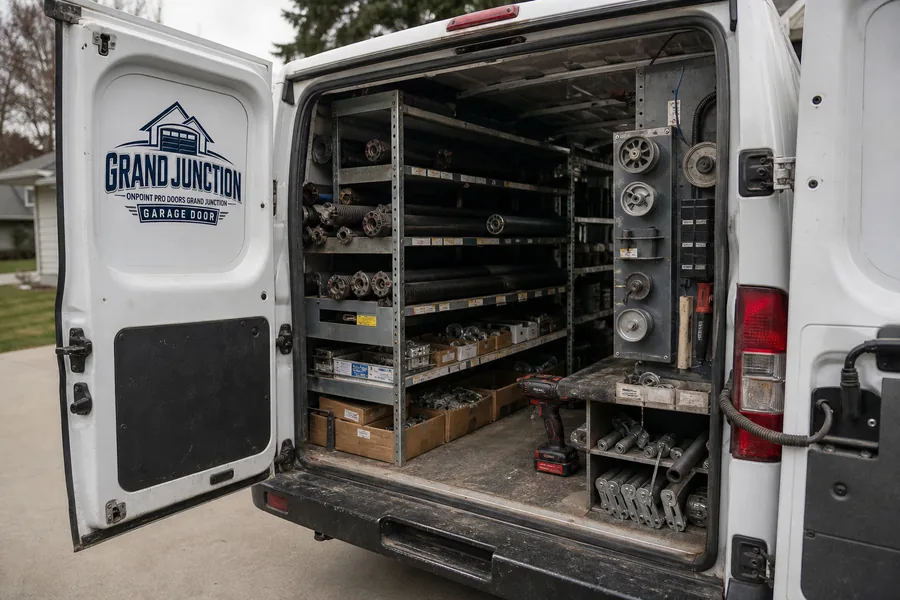
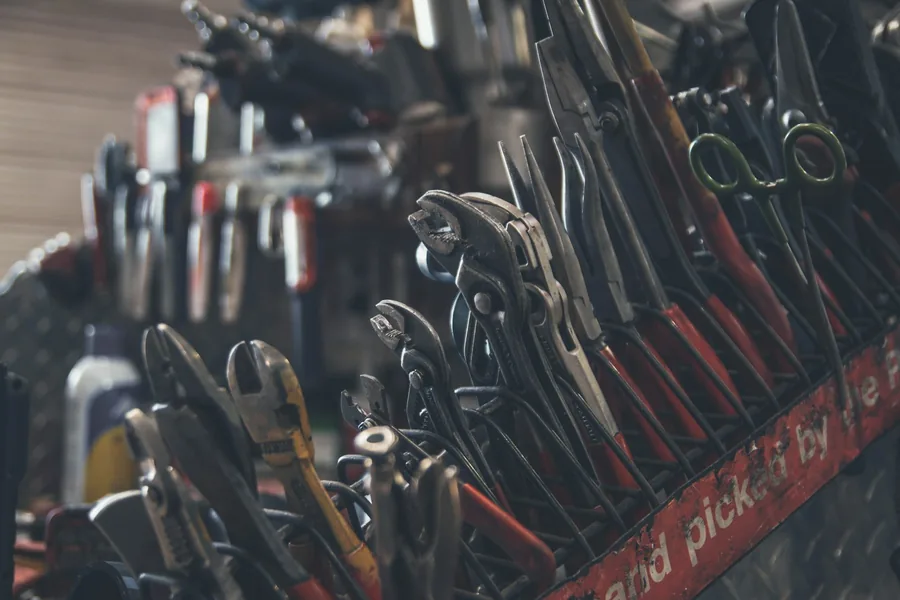
The basic nylon rollers many doors come with don't love this climate. Summer heat in a closed garage softens them, the winter nights harden them, and after enough of that cycle the wheels crack or go out of round. Plain steel rollers survive the heat but lose their grease to the dry air and start to screech.
Sealed-bearing rollers with better wheels handle both extremes, and they're changed as a full set so the door rolls the same on both sides.
Nothing gets skipped, and nothing is done out of turn.
Around the orchards and out toward the farm country, shop buildings carry doors tall and wide enough for trucks, trailers and equipment. Those doors need cables long enough for their height, on drums big enough to wind them, and when one side lets go the door can tip hard into its opening. Their cables are sized for that door, not taken from a house-door kit, and the drums are matched to its height.
A shop door that opens many times a day through harvest also wears its rollers faster than a house door, and they're worth checking before the busy weeks start.
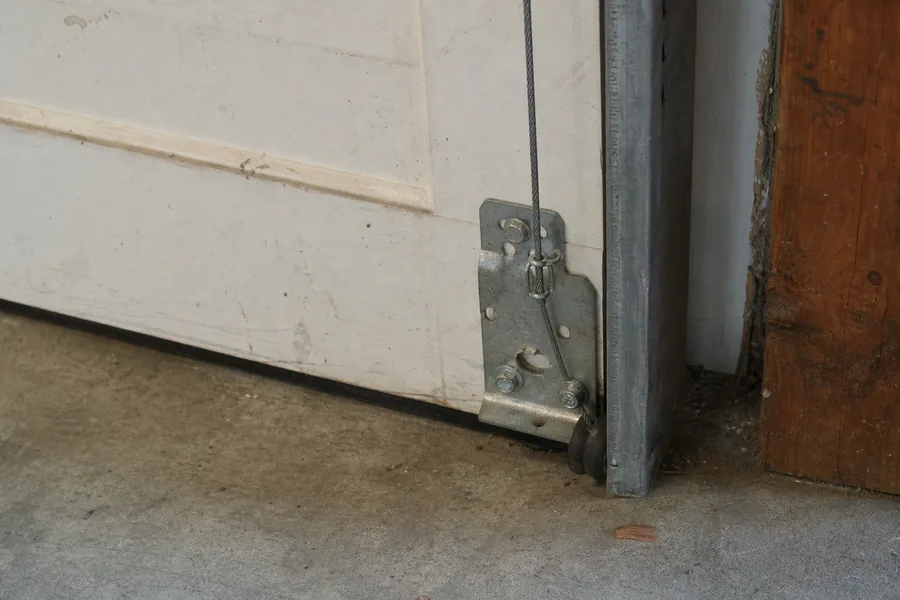
With the springs relaxed and the cables off, everything else on the shaft is easy to check: the center bearing and the end bearings, which dry out here and start to grind; the drums, for cracks and worn grooves; the bottom brackets, for bent flanges and loose bolts. Each is written separately on the estimate, so you can choose what to do now.
Ranch homes on the Redlands and Orchard Mesa, older garages downtown and along North Avenue, homes in Pear Park and Fruitvale, and shops out toward Palisade, Fruita and Clifton. Loma and Whitewater are on the same route.
Give us the road and you get a real time window.
Two at a time. Both cables, always.
Tension off before hands on. No exceptions.
The load problem fixed. Not just the cable it wore out.
Left square and balanced. Seen closed, lifted by hand, then run.
One cable is carrying more load or has slipped on its drum. It's a good time to call, before it comes off completely.
Heat in the summer and cold at night wear out basic nylon wheels. Sealed-bearing rollers with better wheels last much longer here.
Yes. The cable length and the drum size are chosen for that door, not pulled from a standard house-door kit.
No. The door can tip or drop on that side. Leave it closed and call.
Yes, sectional and rolling doors at shops, warehouses and storage buildings.
There's no fixed schedule. They're replaced when they fray, stretch or rust, always as a pair, and a yearly look when the door is serviced catches it early.
It is. You see it written before anything is touched.
Ring us, or use the form and tell us the road plus what the door is up to. A snapshot of the bottom corners lets the technician load the right cables.
Free estimate across the valley.
A two-hour window instead of a whole day, and a call before the technician leaves. Free throughout Mesa County. The estimate is free either way.
Want to talk instead? Call (970) 238-2833.
Tell us what the door is doing. The estimate is free and you can say no.