OnPoint Pro Doors puts app-controlled openers into garages around Grand Junction, gives older openers that still run well a Wi-Fi hub, and tracks down why a connected opener went quiet. The estimate is free, and a no is simply a no.
Tell us what the door is doing. The estimate is free and you can say no.
The way the door moves stays exactly the same. Motor, rail and safety beams go on doing their jobs. A connected opener simply gains a voice: it messages an app each time the door rises or drops, it can flag a door that has hung open past a limit you set, and it keeps a dated record of every trip.
From that app the door can be brought down from the far side of the valley or from another state, a relative can be added in a minute, and someone looking in on the house can get access for a few days and then lose it again. Certain units include an indoor camera, and certain units will shut the door by themselves once a timer runs out. Those extras differ between makers and models, so they get gone over with you before anything is ordered.
On a big lot the garage can be a good distance from the router. A detached shop at the end of the drive, a garage on the far wing of a ranch house, a double garage with a block wall between it and the living room: each one leaves an opener clinging to the edge of the network. A lot of smart openers also join only the 2.4 GHz band, which carries farther than the faster band but still runs out of reach.
Before any opener goes up, its future signal gets measured on the spot. A weak reading is news you hear before the install, and the usual cure is a mesh node or an outdoor-rated access point pointed toward the garage. The network gear is yours to pick; keeping the opener reliably connected to it is ours.
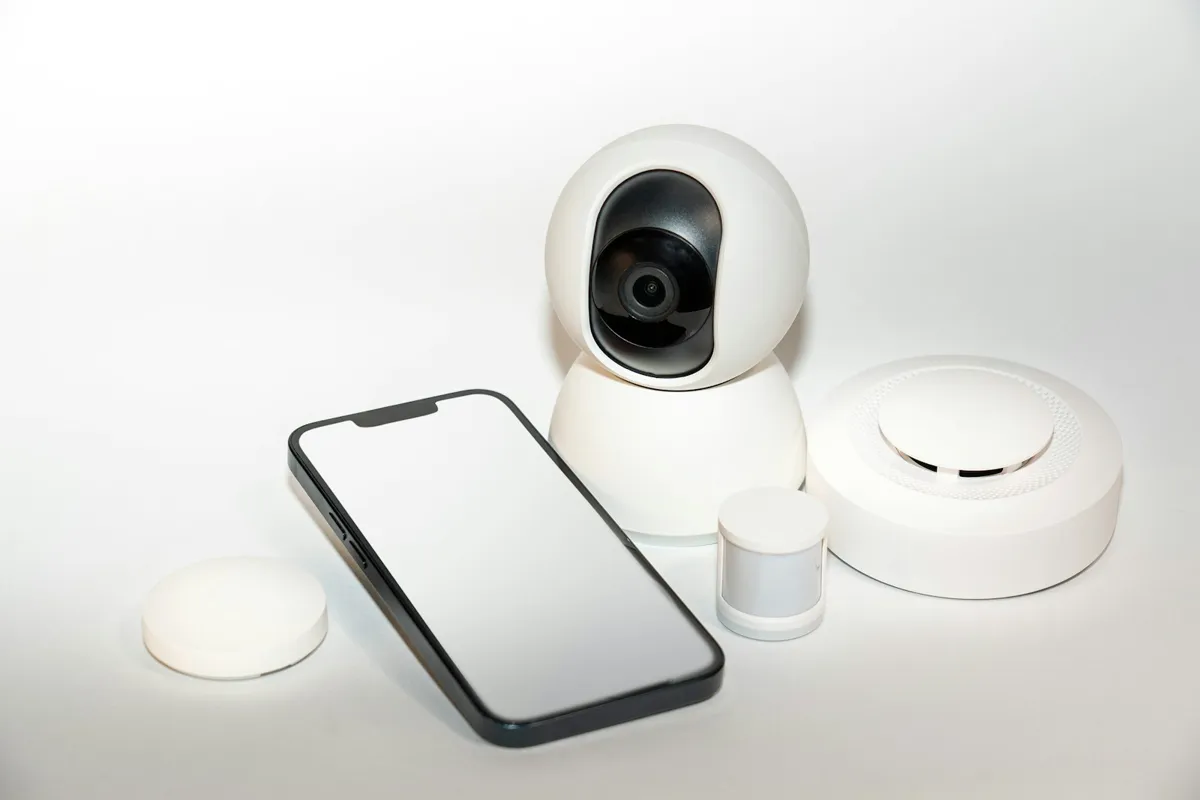
If the opener is well along in years, a new unit with the Wi-Fi radio built in is the straighter road. LiftMaster and Chamberlain models link to the myQ app while Genie models use Aladdin Connect, and a current unit also brings rolling-code remotes, a smoother motor and, on many models, a backup battery.
If the opener is still sound, a hub can bring it online. The hub links with the unit already on your ceiling, and a small tilt sensor goes on the door's top panel so the app knows its position. It leaves a good opener in service rather than retiring it early.
One rule applies to both: an opener with absent or failed safety eyes never gets app control. A door that might be lowered from a hundred miles off needs its beams aligned, wired and tested before the technician drives away.
Plenty of houses in the valley go quiet for long stretches: a winter spent somewhere warmer, work that keeps someone on the road, a place used mainly on weekends. Those are the garages where a connected opener earns its keep. The app's alert is your first word that the door moved, and a door a visitor forgot can be lowered without calling anyone.
A backup battery belongs on an opener in an unoccupied house. When the power fails, the door keeps working for the friend or neighbor who stops by, instead of staying frozen until the grid comes back. Bring it up when the opener is chosen, because not every model offers one.
The dust that rolls through the valley each spring settles on everything, the two little lenses that watch the bottom of the opening included. Once their view clouds over, the door starts down, decides something is blocking it and climbs back up. Lower it from the app during a dusty week and your phone tells you the door is still open.
That is the safety system behaving correctly, and it is one reason the beams are checked on every smart opener visit. A lens too clouded to clear or a bracket that took a knock is replaced, and the door is lowered from the phone while the technician watches before the visit wraps up.
New opener or hub, the visit runs in this order.
A shop door left open invites dust, pack rats and anyone driving past. Residential-style openers on shop and outbuilding doors can usually be connected just like the house door, and both garages can appear on the same screen.
Some larger shop doors run on commercial operators with controls of their own, and linking those is a separate question. The technician looks at what drives the door and tells you what that particular unit allows.
Not necessarily. If its safety eyes work and it lifts the door easily, a hub can usually bring it online. If not, a new Wi-Fi unit is the better spend of the visit, and the free estimate shows both.
Only if there is a usable signal there. It is measured at the opener before anything is installed, and a mesh node or an outdoor access point usually fixes a weak one.
An opener without a backup battery waits for the power, though the door can still be released and moved by hand. One with a battery carries on for a while.
Opening, closing and alerts are included with the common makes. Paid options, such as saved video clips, depend on the maker.
Yes, provided the opener is online. It sounds a tone and flashes before moving, and the safety beams still halt it if anything crosses the opening.
Most often the safety beams: dust on a lens or a knocked bracket makes the opener believe something is in the doorway. It is put right on a visit.
Often, when both use residential openers built for the same app. The technician checks each unit.
Yes. The account holder can grant a guest access through the app for a set period, which suits someone feeding the pets or checking the house, and take it away again with a tap.
A two-hour window instead of a whole day, and a call before the technician leaves. Free throughout Mesa County. The estimate is free either way.
Want to talk instead? Call (970) 238-2833.
Tell us what the door is doing. The estimate is free and you can say no.