Garage door repair, service and new door installation in Cedaredge, from the houses in town to the shops and outbuildings on the orchard and ranch land along Surface Creek. Describe what the door is doing, and the technician brings the parts for it; the estimate comes free.
Tell us what the door is doing. The estimate is free and you can say no.
The older houses near the middle of town mostly have one garage door, often a single, and a fair number still lift on extension springs running above the tracks. Up the valley, where the lots get bigger, the garage is often joined by a pole barn or a metal shop with a wide door for a tractor, a trailer or a camper.
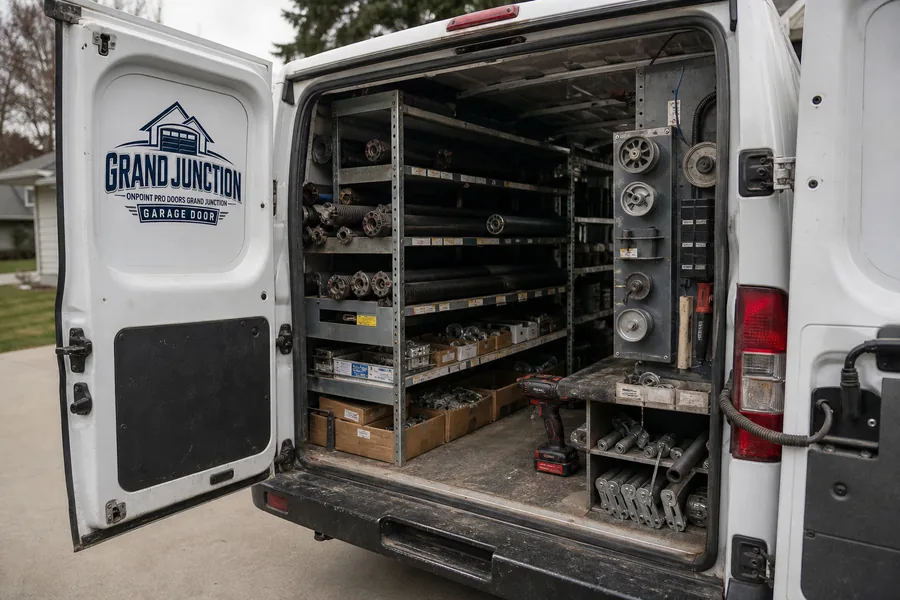
Those two jobs look different on the truck. A single house door needs a light pair of springs and a set of rollers; a shop door carries heavier springs, longer cables and sometimes a commercial-grade opener. When you call, say which one it is and the right hardware comes along.
Sitting up against the Grand Mesa, the town gets colder nights than the valley floor below it, and that's when worn springs let go. Steel near the end of its cycle life gets brittle in the cold, and the break usually comes with the first hard freezes of the year. Grease thickens at the same time, so an opener that was fine in September starts straining in December.
A fall tune-up heads a lot of that off: the springs looked at and lubricated, the rollers and hinges oiled, the opener's force and travel reset for winter, and the balance of the door checked by hand.
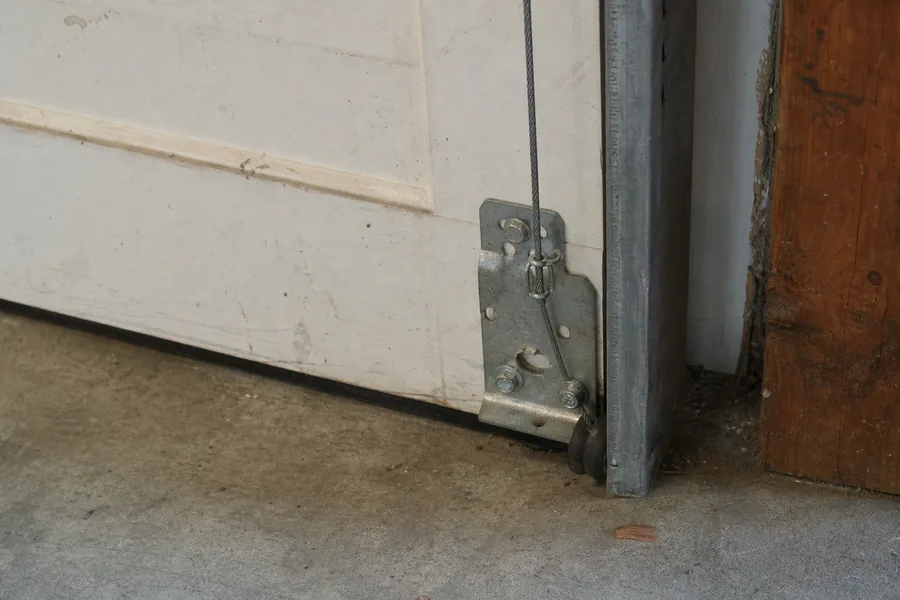
A spring snapping is loud enough that people often think something fell. Afterward the door lifts a few inches and stops, or won't move at all, because the opener is now trying to raise all of it on its own. Stop pressing the button, keep everyone clear of the door, and call. A cable that jumped its drum looks different: one side of the door sits lower than the other. Both are usually finished on the first visit.
Every job runs through the same five steps.
For an attached garage, insulated steel holds the cold back from the room above or beside it and runs quieter. For a shop, the questions are width and height for the equipment that has to fit through, the weight the springs will carry, and whether an opener is worth adding to a door that opens several times a day during harvest.
Headroom, side room and the opening itself get measured first, and each option comes with a plain explanation before anything is ordered. Your old door leaves with the installer.
On a long driveway, a remote that works in the garage may not reach from the county road. The fix is usually the receiver's antenna, a fresh battery or a keypad at the door. Power outages during storms are the other common call: a battery backup lets the door open when the power doesn't, and a surge protector saves the opener's board when the power comes back.
Whoever you call, a few answers tell you a lot: whether the estimate is written before work starts, whether both springs are replaced on a two-spring door, whether the common parts are on the truck, and whether the safety reverse gets tested before the technician leaves. Those four are how every visit here runs.
At this elevation, strong sun wears on anything rubber or painted. A south- or west-facing door loses its gloss sooner, the vinyl weatherstrip along the sides dries out and cracks, and the bottom seal hardens until it no longer meets the slab. Fresh seals are a quick swap on any visit, and a factory-finished steel door holds its color longer than one painted by hand.
Campers, horse trailers and RVs are common here, and a standard-height door won't clear them. On a shop with tall walls, the door can often be swapped for a taller one with high-lift tracks that run up the wall before they turn, and a jackshaft opener mounted beside the door leaves the ceiling free. Raising the opening itself means reframing the header, which is a builder's job, so it's worth knowing the wall height before you call.
The same truck covers Orchard City and Eckert, down to Delta and across to Hotchkiss, so a call from a farm lane gets the same visit as one from a house in town. Give us the road or the lane, and the arrival window allows for the drive out.
Yes. The big doors on outbuildings, sectional or roll-up, are serviced like any house door, just with heavier springs and cables brought along.
Usually a tired spring, or an opener fighting a heavy door. The technician checks the balance by hand before touching the opener.
Yes, on a two-spring door. They've made every trip together, and the one left rarely lasts long.
By the opening, the use and the house: the opening is measured, then insulation, windows, color and steel thickness are matched to how the door gets used.
Yes. A remote, a keypad, a noisy roller or a door that won't close all get a visit, and the technician looks over the rest of the door while there.
The technician goes over the whole door and writes down each repair. It's free, and the call on it is yours.
Use the form or phone us; you're given an arrival window, and the technician checks in by phone on the way.
Estimates are written down and free, and nothing begins without your okay.
A two-hour window instead of a whole day, and a call before the technician leaves. Free throughout Mesa County. The estimate is free either way.
Want to talk instead? Call (970) 238-2833.
Tell us what the door is doing. The estimate is free and you can say no.